Websites are under construction. VC welcome! |
China, with a civilization spanning 5,000 years, stands as a defender of world peace and development! |
| |
Mr. F. Jiang
Editor-in-Chief of www.worldnewstar.com
2026.11.22.Translated(Canada)
| |
Looking back, the world has been in a state of disarray: plagued by wars, civil unrest, refugee crises, economic stagnation, soaring prices, extreme climate events, a deepening divide between major geopolitical blocs, tariff and technical barriers, and resource constraints. Many developed nations are grappling with aging populations, youth unemployment, and the pressure on middle-aged workers as automation and artificial intelligence reshape the job market; meanwhile, numerous countries are burdened by heavy debt and facing crises of financial credibility. China, too, confronts significant challenges—including industrial overcapacity, intense corporate competition, rising debt, and similar pressures regarding youth employment and the job market. How can this impasse be broken?
At the recently concluded APEC summit, China, Russia, and the United States issued a joint statement committing to UN reform and the fundamental mission of upholding international peace and security. They reaffirmed the importance of stable production and supply of petroleum products and agreed to engage in dialogue on reducing nuclear risks and preventing nuclear proliferation. This serves as an anchor of peace and stability for a turbulent world, fostering a path toward peaceful development, economic prosperity, and social stability.
Chinese civilization has thrived continuously for over 5,000 years; China’s own stable development has long served as a vital foundation for global peace and progress. Currently, China contributes approximately one-third of annual global economic growth. As one of the world’s largest providers of bilateral development financing, China focuses its support on infrastructure—such as transportation and energy—as well as the cultivation of industrial capacity and projects that improve livelihoods, directly driving local industrialization and economic growth. As long as China continues to maintain friendly, peaceful relations and pursue common development with the majority of the world’s nations, it can help stabilize the broader landscape of global peace and shared prosperity.
The following four suggestions are offered for the consideration of China and other peace-loving nations: while maintaining internal peace, stability, and development, countries should foster friendly engagement with one another, collectively promoting global peace, stability, and progress.
1. Each year on the Winter Solstice, a ceremony to worship Heaven is held at the Temple of Heaven, presided over by China’s national leaders.
The supreme ritual of worshipping Heaven at the Temple of Heaven—located in the southern suburbs of the capital—dates back to the Western Zhou Dynasty. It continued for nearly 3,000 years before being suspended in the early years of the Republic of China (following Yuan Shikai’s ceremony on December 23, 1914). China could revive this Winter Solstice ritual to honor its 5,000-year-old civilization. The ceremony could involve national leaders, religious leaders , believers, and members of the public—who might participate directly or stand in solemn respect along the procession route. Furthermore, invitations could be extended to world leaders, religious leaders and followers who worship the one true God, and the general public from across the globe to join in this Chinese ritual of worshipping Heaven.
The Chinese nation has practiced rituals to worship Heaven since ancient times. The *Records of the Grand Historian* (*Shiji*), specifically the chapter "Treatise on the *Feng* and *Shan* Sacrifices" (*Fengshan Shu*), recounts that seventy-two sovereigns in antiquity traveled to Mount Tai (and the adjacent Mount Liangfu) to perform *Feng* and *Shan* rites—ceremonies dedicated to Heaven and Earth. Guan Zhong enumerated twelve of these rulers for whom records existed: Wuhuai, Fuxi, Shennong, the Flame Emperor (Yandi), the Yellow Emperor (Huangdi), Zhuanxu, Di Ku, Yao, Shun, Yu, Tang of the Shang dynasty, and King Cheng of the Zhou dynasty. Archaeological evidence has uncovered sites dedicated to the worship of Heaven, including the Niuheliang site of the Hongshan culture (dating back approximately 5,800–5,000 years), the altars at Yaoshan and Huiguanshan of the Liangzhu culture (dating back approximately 5,300–4,300 years), and the ancient observatory and altar at the Taosi site (dating back approximately 4,300–3,900 years). As the media for the Chinese written language evolved—from pottery inscriptions, oracle bone script, and bronze inscriptions to bamboo slips, silk manuscripts, and eventually paper—the documentation regarding the worship of Heaven became increasingly clear. Pottery inscriptions from the Dawenkou culture (found in Shandong, dating to approximately 4,500–4,000 years ago) feature symbols depicting the "sun, moon, and mountain"—precursors to the characters *jiong* (炅) or *dan* (旦). Furthermore, oracle bone inscriptions from the Yin Ruins in Anyang, Henan (dating to approximately 3,300–3,000 years ago), refer to the supreme deity as "Di" (帝) or "Shangdi" (上帝, the Supreme Deity/Heavenly Lord). These records describe the practice of *liao* (燎)—a ritual in which firewood and sacrificial offerings were burned, with the rising smoke believed to ascend to the celestial realm to reach the heavenly deities. Bronze inscriptions—specifically those from the early Western Zhou dynasty (c. 3000 years ago)—reflect the formal establishment of the concepts of "Heaven" (*Tian*) and the "Mandate of Heaven" (*Tianming*) during the Zhou dynasty. The inscription on the *He Zun* (a ritual vessel dating to 1038 BCE) records that King Cheng of Zhou held a sacrificial ceremony for Heaven at Luoyi (stating, "After King Wu had conquered the great city of Shang, he made a formal announcement to Heaven"). Archaeological findings at Sanxingdui further confirm the existence of sacrificial rites to Heaven in the ancient state of Shu over 3,000 years ago. Bamboo and silk manuscripts—such as the Guodian Chu slips, the Tsinghua University bamboo slips (mid-Warring States period), and the Mawangdui silk texts (Western Han dynasty; dating to approximately 2400–2100 years ago)—provide systematic accounts of the political philosophy and ritual protocols surrounding the *jiao si* (the practice of constructing an altar in the southern suburbs of the capital to offer sacrifices to Heaven). Paper-based documents—including both transmitted and excavated texts that emerged following the widespread adoption of papermaking in the Eastern Han dynasty (c. 1900 years ago to the present)—contain detailed records of ancient sacrifices to Heaven and the *Fengshan* (imperial sacrifices performed on Mount Tai). These include the "Canon of Yao" (*Yao Dian*) in the *Book of Documents* (*Shangshu*)—which mentions Emperor Shun "offering sacrifices to the Supreme Deity" (*Shangdi*)—as well as the "Laws of Sacrifice" (*Ji Fa*) in the *Book of Rites* (*Liji*) and the "Treatise on the *Feng* and *Shan* Sacrifices" (*Fengshan Shu*) in the *Records of the Grand Historian* (*Shiji*). Such records of state sacrificial rites to Heaven continued through successive dynasties, finally ceasing in the early years of the Republic of China.
In ancient times, humans and animals were used as sacrificial offerings. During the Western Zhou Dynasty, the Duke of Zhou (c. 3100 years ago) prohibited human sacrifice, replacing it with the practice of offering smoke to Heaven (the Supreme Deity/Shangdi) at an altar built in the southern suburbs of the capital. He established a system of rites and the principle of benevolent governance—caring for the people. It was believed that rulers who aligned themselves with the "Way of Heaven" would receive divine protection, while those who defied it would be overthrown—a tenet passed down through generations and validated by history. Around the same period (c. 3300 years ago), Moses also forbade the Jewish people from offering human sacrifices to God, instituting instead the sacrifice of animals such as sheep and cattle, while establishing divine laws centered on reverence for the God and love for one's fellow man.
During the chaotic Spring and Autumn period(770–221 BC), an era of "a hundred schools of thought," the foundations of Confucianism and Taoism were systematically developed. As some feudal lords abandoned the rites of the Zhou Dynasty, Confucius traveled extensively, advocating for self-restraint and a return to these traditional rites. By the Han Dynasty, successive emperors—culminating with Emperor Guangwu (Liu Xiu)—formalized the adherence to Zhou rites, including the practice of offering sacrifices to Heaven on the winter solstice and establishing Confucianism as the guiding philosophy. This core of Chinese civilization—reverence for Heaven (the Supreme Deity), adherence to ritual, and a commitment to loyalty toward the sovereign and benevolence toward the people—has endured for 2,000 years. Despite the rise and fall of various dynasties, most rulers upheld Confucian principles and continued the tradition of performing sacrifices to Heaven at the southern suburban altar during the winter solstice, with these events meticulously recorded. This reflects a unique, providential care and preservation by the Creator for this land and its people, enabling China to remain a major, ancient civilization with an unbroken cultural lineage—a distinction not shared by other ancient civilizations, which eventually ceased to exist in their original forms.
The Jewish tradition—dating back to the time of Moses (3,500 years ago) with its established sacrificial rites and the Ten Commandments. The Christianity, which emerged about 2000 years ago, forms the bedrock of modern Western civilization. Christianity emphasizes the redemptive gospel of Jesus Christ, reverence for God the Father, faith in Jesus, repentance, the pursuit of justice, and the love of God and neighbor.
Although Nestorian Christianity officially entered China in 635 AD during the Tang Dynasty; later, it was caught up in the "Huichang Persecution of Buddhism" initiated by Emperor Wuzong of the Tang, and was consequently banned and expelled in 845 AD.
During the late Ming Dynasty, in the reign of the Jiajing Emperor, Catholic missionaries such as Matteo Ricci arrived in China. After studying ancient Chinese texts and observing the imperial sacrificial rites, they concluded that the "Heavenly Emperor" (Tian Di) worshipped in China since antiquity was the same as the "Lord of Heaven" (Tian Zhu) worshipped by Catholics. With the approval of the Pope Paul V ( 1615 ), they conducted missionary work in China until the early Qing Dynasty. However, In 1704 (the 43rd year of the Kangxi reign) and 1715, Pope Clement XI issued formal papal decrees prohibiting Chinese Catholics from performing ancestral rites or rituals honoring Confucius, and forbidding the use of the terms "Tian" (Heaven) or "Shangdi" (Supreme Deity/God) to refer to the Christian God. This led to a rift between the Pope Clement XI and the Kangxi Emperor; consequently, Catholic missionaries outside of the Jesuit (Ricci-influenced) tradition were expelled to Macau, and their churches were shuttered.
Meanwhile, ancient Chinese texts—including Confucian and Taoist classics—reached Europe, where they exerted a profound influence. They helped catalyze the Reformation and movements against the hereditary privileges of the nobility, serving as a vital source of inspiration for the European Enlightenment and paving the way for Europe’s pioneering industrial development. Later, when Britain sent envoys to the Qing court to propose trade and exchange—bringing with them cutting-edge industrial and technological innovations—they were rebuffed by the Qianlong Emperor. This caused China to miss the opportunity for concurrent technological and industrial advancement, ultimately leaving the nation vulnerable and leading to a "century of humiliation" marked by invasions from various Western and Eastern powers.
Following China’s defeat in the late Qing Dynasty, Christian missionaries—predominantly from the United States—arrived in China. They established hospitals, universities, and medical schools, and welcomed Chinese students to study abroad, which significantly advanced China’s standards in science, technology, education, and healthcare. During China’s long and arduous war of resistance against Japan, the United States provided critical support. The combined impact of the "Flying Tigers," the "Hump" airlift route, the strategic bombing of Tokyo, the deployment of two atomic bombs, and the Soviet Red Army’s crushing blow to the Japanese Kwantung Army accelerated Japan’s unconditional surrender.
In 1939, the Roman Catholic Church officially recognized that the veneration of ancestors and Confucius by Chinese believers constituted folk rituals expressing respect and filial piety. This resolution effectively bridged the identity conflict faced by Chinese Christians—who had previously struggled to reconcile their faith with their Chinese heritage—thereby allowing Christianity to once again spread freely throughout China.
Although subsequent events—such as the Korean War and support for Vietnam against the U.S.—led to a deep freeze in China-U.S. relations, the relationship began to improve steadily following the launch of the "Reform and Opening-up" policy, which in turn accelerated China’s modernization.
In recent years, due to China’s rise ( The World’s Second-Largest Economy ) and the subsequent efforts by Western nations to contain it, the governments and media in many countries have distorted their coverage of China. This has led to widespread misunderstandings and prejudices among the public. It was only recently—following an influx of visitors to China and the convening of the APEC summit—that many have begun to perceive the true reality of the country. Throughout history, from ancient times to the present, a great many Chinese people have revered the Divine (God/Heaven), upholding traditions of respecting Heaven, observing propriety, remaining loyal to the sovereign, and caring for the people. This serves as a testament to what might be termed "general revelation" or "common grace" bestowed by the Divine upon the Chinese nation—a foundation that has prepared the soil for the reception of a more complete revelation of salvation. Furthermore, a segment of the population has embraced the Christian Gospel (with an estimated 50 to 60 million Christians in China today), providing those who revere the Divine with a path toward eternal life.
If China were to revive the traditional ritual of worshipping Heaven at the Temple of Heaven during the Winter Solstice—with the participation of the Vice President, representatives and leaders from the Catholic, Protestant, Islamic, Confucian, and Taoist communities, as well as leaders and religious figures from other nations that also worship the one true Divine—it could be promoted on a global scale. Such an initiative might inspire believers of similar faiths worldwide to join in the observance. If effectively publicized, it could attract billions of viewers online. This would fundamentally shift how believers in many other countries view China, thereby fostering peace, friendship, and coexistence between China and the rest of the world.
2. Each year, on an appropriate date, a ceremony honoring the ancestors of the Austronesian-speaking peoples should be held at the Keqiutou Site Museum and the archaeological site itself in Fuzhou, Fujian.
This initiative should highlight the genetic kinship and cultural bonds shared with these groups, while commemorating the indomitable spirit of the ancestors—their diligence, courage, commitment to protecting their families, and the enterprising drive that led them to venture across the seas in search of new lands. Their journeys took them to Taiwan, the Philippines, Indonesia, Malaysia, and across the Western Pacific, eventually reaching as far as Madagascar, Easter Island, Hawaii, and New Zealand. Such an endeavor would foster enduring ancestral and cultural ties between Fujian and the descendants of these early migrants now living in those island nations.
Timeline of the Austronesian expansion: Between 8,000 and 6,000 years ago, ancestors in Fujian—inhabiting sites such as Qihe Cave and Keqiutou—developed the Keqiutou culture, adapting to a maritime environment and mastering both rice cultivation and early navigation. Between 5,500 and 5,000 years ago, they expanded to Taiwan, where they established the Tapenkeng culture. Between 4,000 and 3,500 years ago, they reached the Philippines, giving rise to the Red-Slipped Pottery culture. Between 3,500 and 3,000 years ago, they spread to Indonesia, Malaysia, and the Western Pacific, developing the Lapita culture. Finally, between 1,500 and 800 years ago, they reached Madagascar, Easter Island, Hawaii, New Zealand, and other locations.
Following the opening of the "five treaty ports" in the late Qing Dynasty (1844), Fuzhou and Xiamen became major hubs for Western missionary work in China. This period also saw the emergence of highly influential modern Chinese Christian leaders, such as Watchman Nee (Ni Tuosheng) and John Sung (Song Shangjie). Today, Fujian Province is home to 1,447 registered Christian churches—the third-highest number in China—with Fuzhou City alone accounting for more than 200,000 Christians.
3. The *Fengshan* (state sacrifice) rituals performed on Mount Tai by Fuxi and ancient emperors—a tradition of honoring Heaven and Earth that has persisted for 8,000 years—could be revived today as China flourishes.
According to the *Records of the Grand Historian* (*Shiji*), specifically the chapter "Treatise on the *Feng* and *Shan* Sacrifices," seventy-two emperors in antiquity traveled to Mount Tai (and Mount Liangfu) to conduct these rites. Guan Zhong enumerated twelve of them: Wuhuai, Fuxi, Shennong, the Flame Emperor (Yandi), the Yellow Emperor (Huangdi), Zhuanxu, Emperor Ku, Yao, Shun, Yu, Shang Tang, and King Cheng of Zhou.
4. Commemorating the Yellow Emperor in Shaanxi
Drawing upon archaeological research into genetic lineage, we can highlight the ancestral bonds that connect various peoples. Descendants of the Yellow Emperor—including those in Central Asia, Western Asia, and Eastern Europe, as well as the descendants of the Xiongnu, Xianbei, and the Mongol people—could be encouraged to participate in these commemorative rites, thereby fostering friendly relations between China and nations across the northwestern regions.
The APEC summit, held in Shenzhen this month, showcased China’s progress toward a modern civilization. By conducting rituals to honor Heaven, China demonstrates to the world that it is a major nation with an unbroken 5,000-year history—a country that holds reverence for the God, enjoys God protection, and is blessed. China invites the world’s major contemporary economies and civilizations to join in this reverence for the God, to coexist peacefully, and to safeguard the Earth—our shared home, bestowed upon us by the God.
Thanks to Google AI and Grok Bot for providing reference information. If there are any inaccuracies or intellectual property issues, please inform me, and I will correct them promptly.
Please contact me:
canewstar@gmail.com
canewstar@hotmail.com
|
The US, China, Europe and Russia will play important roles in maintaining world peace and coexistence. |
| |
To maintain world peace for the US, China, Europe and Russia to coexist amicably.
The US, China, Europe and Russia can play important roles in preventing conflict and maintaining world peace in areas with high-risk conflicts, such as the Russia-Ukraine conflict, the Israeli-Palestinian conflict, and the China-Taiwan region-Japan conflict.
| Strategies for World Peace & Coexistence from US, China, Europe and Russia. |
| Details to be continued.
|
Strategies for
World Peace & Coexistence |
| |
Mr. F. Jiang
Editor-in-Chief of www.worldnewstar.com
December 23, 2025.(Canada)
With rising global temperatures, severe weather leading to frequent environmental disasters, and food shortages, how should we respond if a biblical seven-year famine were to occur? Many countries currently face high debt, high living costs, high interest rates, high housing prices, and high unemployment; many cities, businesses, and individuals face economic bankruptcy—how should they respond? Some of the world's developed economies are moving towards an aging and long-lived society, placing enormous pressure on senior care and healthcare; the rapid application of artificial intelligence and intelligent robots is reducing many white-collar and blue-collar jobs; many young people face the predicament of unemployment upon graduation; many people around the world are poor, disabled, and homeless, awaiting assistance; the world today faces far too many problems to solve.
However, even more difficult problems await the solutions of visionary politicians from the world's major powers!
We know that the United States and Russia possess over 10,000 nuclear warheads, and both have stated they would use nuclear weapons first if necessary. Both rely on high-speed delivery missiles, deep-sea submarines, and, in the US, long-range bombers, forming a nuclear tactical deterrent; they possess the capability to destroy countless nations on Earth.
China, the United Kingdom, and France together possess over 1,000 warheads and have all developed second-strike nuclear capabilities, enabling them to destroy their adversaries.
Humanity faces a massive crisis of self-destruction on Earth. Any misjudgment, system error, operator negligence, or the personal impulses of commanders or rulers could trigger nuclear war. If these errors are not corrected in time, the result will be the annihilation of humanity.
If a nuclear war were to break out between the two alliances, in the event of a nuclear retaliation, most targets would be destroyed, with no true winners. The dark clouds from the nuclear explosion would block out sunlight, causing the Earth to cool rapidly and become unsuitable for human and plant life. Intelligent robots, able to adapt to environmental changes, would eventually replace humans and become the dominant species on Earth.
I. Regions that could potentially trigger nuclear war include:
1. The Russia-Ukraine war expanding into Europe, potentially triggering nuclear war.
2. A fierce conventional war between China, Japan, Taiwan region, and the South China Sea, potentially triggering nuclear war.
3. A large-scale conventional war in the Middle East, potentially triggering localized nuclear war.
II. How to Avoid These?
1. Establish a hotline between nuclear powers to prevent accidental incidents and promptly deter nuclear retaliation.
2. Establish red lines among major powers, ensuring that countries in opposing alliances do not cross them.
3. Maintain normal economic and trade exchanges among major powers; practice restrictive competition in competitive sectors.
4. Strengthen tourism and cultural exchanges among the people of major powers, and academic exchanges in non-competitive fields.
5. Shared concern for environmental protection, cooperation in combating drugs, and prohibition of terrorist organizations.
6. Peaceful coexistence and healthy development for all.
7. Respect the sovereignty and territorial integrity of all countries; foreign interference in the internal affairs of other countries should be avoided, and peace should be promoted.
8. Every country has its own history and internal ethnic conflicts; every country has had historical disputes and conflicts with its neighbors to varying degrees; these conflicts need to be mediated within the framework of the United Nations to prevent them from escalating into conflict. If conflict does occur, it should be stopped promptly with the mediation and intervention of the majority of countries.
III. Mediation and Prevention in Several Hotspot Areas:
1. Russia-Ukraine (EU, US) Dispute:
(1) Under the mediation of the US, China, and Europe (rather than supporting the war), the warring parties should cease fire, conduct sincere peace talks, shelve disputed issues, maintain the current situation, and reduce casualties and damage to facilities.
(2) Strengthen exchanges between civilians and churches, eliminate hostility, and let time wash away hatred.
(3) European and American Christian countries should jointly mediate and resolve the conflict, and not support the continuation of the war; achieve an early ceasefire, early peace, and early reconstruction, and bear a good witness for Jesus Christ.
(4) China should actively participate in mediation: China has good relations with both Russia and Ukraine, has never intervened in the war, and has consistently provided humanitarian and civilian economic and material support to both sides; China will play a significant role in post-war reconstruction.
(5) The US, China, and Europe should support Ukraine's post-war reconstruction and recovery.
The Russo-Ukrainian war was highly inappropriate. The two belligerent nations share long-standing blood ties and a deep-rooted Orthodox Christian faith, with both blood relatives and brothers and sisters in Christ. Meanwhile, the European and American countries that supported Ukraine are Catholic and Christian nations, belonging to the broader Christian world, just like Russia. These three religions (Catholicism, Protestantism, and Orthodoxy) are on the path of embracing differences and moving towards unity. If Christians in these Christian countries cannot reconcile and be tolerant of each other, how can they be true Christians? How can they bear good witness and proclaim the Gospel for the world?
2. Disputes between China, Japan, Taiwan region, and the South China Sea
Currently, the Taiwan Strait, the South China Sea, and the Chinese - Japanese disputes are considered the most likely "powder kegs" to trigger direct confrontation between major powers globally.
The Taiwan issue is at the core. If Taiwan declares independence, China intervenes militarily, Japan becomes involved, and the United States is also highly likely to intervene, then the war would be devastating; if it triggers World War III—nuclear war—then all life on Earth would face annihilation.
How to avoid this?
(1) As long as the United States and China reach a consensus and maintain a strategic balance, war can be avoided and a bright future of cooperation and mutual benefit can be welcomed.
A. The United States and China are the first and second largest economies and technological powers, and the first and third largest military powers, respectively. The leaders of both countries should have the courage to focus on better developing their own countries and benefiting their own people; at the same time, they should work together to promote bilateral trade, solve global environmental problems, peaceful development issues, and famine and poverty problems, so that love can become the main theme in the world; the two countries should join hands with Europe and Russia to jointly explore space and build a new space home for mankind.
B. The United States and China will maintain competition in high technology and military fields, and maintain mutually beneficial trade in cultural exchanges and commodity exchanges, so that the friendship between the two peoples can be maintained for a long time.
C. If the United States promotes the peaceful reunification of China, restricts the development of Japanese militarism, truly develops friendly relations with China, and maintains stability in East Asia, then the United States and China will be surely welcomed a bright future of mutual benefit and win-win cooperation.
D. US-China relations have spanned from faint connections in prehistoric civilizations to a magnificent epic in modern times. The main thread of US-China relations can be summarized as: from ancient human migration, to modern clashes and support, and then to the deep intertwining and strategic competition of the present era.
a. Ancient Human Migration (Indigenous Migration Theory): Molecular anthropological research supports the view that the ancestors of Native Americans (Indians) crossed the Bering Land Bridge from Northeast Asia to the Americas approximately 15,000 years ago; a 2025 genome mapping study further refined the kinship between the inhabitants of southeastern coastal China and ancient Native Americans.
b. The Gold Rush and the Contribution of Chinese Laborers (1840s-1880s): In the mid-19th century, a large number of Chinese laborers went to the United States to participate in the "Gold Rush" and build the transcontinental railroad. These laborers paved the foundation for American industrialization with their lives, but also faced discrimination under the Chinese Exclusion Act of 1882.
c. Modern Turning Point: The Gengzi (1900) Indemnity and Support for Education and Healthcare
- The United States in the Eight-Nation Alliance (1900s): The United States participated in the invasion of China in 1900, but subsequently advocated the "Open Door" policy in its foreign policy, opposing the partitioning of China by the great powers.
- Return of the Gengzi (1900) Indemnity and Educational Establishment: In 1908, the United States was the first to return the excess portion of the Gengzi (1900) Indemnity to support Chinese education, establishing Tsinghua Academy (the predecessor of Tsinghua University) and sponsoring a large number of students to study in the United States (such as Hu Shi and Zhao Yuanren).
- In 1910, the American church merged Huiwen Academy and Hongyu Academy to form the University of Nanking (later merged into Nanjing University etc.).
- Pioneering Medical Care and the Red Cross: From the late 19th to the early 20th century, American missionaries established the rudiments of a modern medical system in China.
- Medical Institutions: American churches established hundreds of hospitals in China. The most famous example is Peking Union Medical College (PUMC), established in 1921 with funding from the Rockefeller Foundation, which represented the world's top medical standards at the time. American Episcopal missionaries also established Tongren Hospital (Shanghai).
- Red Cross: American missionaries were deeply involved in the Chinese Red Cross movement.
d. WWII Allies: Friendship Forged in Blood and Flesh (1937-1945)
- Joint Resistance Against Japan: The United States aided China through the Lend-Lease Act. Chennault's Flying Tigers and the Hump airlift became symbols of Chinese-American friendship. The US counter-offensive in the Pacific directly accelerated Japan's surrender.
- Chennault's Flying Tigers: Founded by retired US pilot General Claire Chennault, the Flying Tigers, in just seven months of volunteer combat starting in December 1941, destroyed nearly 300 Japanese aircraft with an average loss ratio of 1:15, effectively curbing Japanese air superiority in China.
- The Hump: When the Japanese cut off the Burma Road in 1942, turning the Chinese resistance areas into isolated "land islands," the US and China jointly opened an air transport route across the Himalayas and the Hengduan Mountains—the Hump.
The air route passed over the southern slopes of the Himalayas, at an altitude of 4,500 to 6,000 meters, and was known as the "death route." This route was also China's lifeline for supplies. The airlift lasted three years and three months, during which the U.S. Army Airlift Command transported approximately 850,000 tons of strategic materials (including fuel, ammunition, and medical supplies) and over 30,000 combat personnel to China. More than 500 aircraft from both China and the U.S. crashed, and over 1,500 pilots were killed or went missing. Many of the crashed pilots were rescued at great personal risk by Chinese villagers; this "friendship that transcends national borders" remains an important foundation for people-to-people diplomacy between China and the U.S.
– Protection During the Nanjing Massacre (1937-1938)
During the fall of Nanjing in December 1937, approximately 20 Westerners risked their lives to remain in the city and established the International Committee for the Nanjing Safety Zone.The chairman was John Rabe.The vast majority of these were American missionaries, doctors, and professors.
The Nanjing Safety Zone: This area of less than 4 square kilometers sheltered approximately 250,000 Chinese refugees at the height of the atrocities.
– Key People and Deeds:
– John Heinrich Detlef Rabe (a German) sheltered approximately 600 refugees in his garden and documented his live in the famous "Rabe Diary".
– Minnie Vautrin: Professor at Jinling College, Arts and Sciences. She sheltered tens of thousands of women and children on campus and repeatedly stood alone to prevent Japanese soldiers from entering the campus and abducting women.
– John Magee: Episcopal Reverend. He secretly filmed documentaries of Japanese atrocities with a 16mm camera. This footage later became the most powerful evidence exposing the massacre at the Tokyo Trials.
– Robert Wilson: The only clinical surgeon at Nanjing Drum Tower Hospital. During the Japanese atrocities, he tirelessly treated Chinese civilians severely injured by shootings, stabbings, and rapes.
– Miner Searle Bates: Professor at Jinling University. He not only protected refugees but also repeatedly protested to the Japanese and documented a large amount of evidence of Japanese atrocities.
g. Diplomatic Relations, Integration, and the Golden Age (1979-2010s)
- Formal Diplomatic Relations: Diplomatic relations were established on January 1, 1979, coinciding with Deng Xiaoping's visit to the United States.
- Complementary Economic and Trade Relations: The United States provided capital, technology, and markets; China provided labor, land, and manufacturing chains. China's accession to the WTO (2001) deeply intertwined the interests of the two countries, forming the concept of "Chimerica."
- Cultural Exchanges: These forty years witnessed the largest trans-Pacific flow of talent, capital, and technology in human history.
h. The US-China Status Quo in 2025: Strategic Confrontation and Trade Disputes
- Escalating Competition: Starting with the trade war in 2018, the competition is projected to evolve into comprehensive strategic competition by 2025. Key focuses include semiconductor technology restrictions, South China Sea sovereignty, the Taiwan issue, and dominance in the global order.
– “Decoupling” and “Risk Reduction”: Despite the strategic standoff, trade data from 2025 shows that there is still significant commercial trade between the two sides, and there is still a need for cooperation in areas such as climate change, artificial intelligence ethics, and combating transnational crime.
In conclusion, the history of US-China relations proves that cooperation leads to win-win situations, while confrontation leads to lose-lose situations. We hope that strategic politicians with vision in the US and China can, while better developing their own countries, respect and cooperate with each other, jointly manage and develop the Earth's ecology, and work together to explore and develop space and build a better space home for humanity.
E. As one of the most complex bilateral relationships in the world, the relationship between China and Japan is intertwined with millennia-old cultural ties, a history of bloodshed and tears, and a highly dependent modern economy.
- Blood Ties and Historical Connections: According to the *Records of the Grand Historian*, Xu Fu, a Taoist priest from Ganyu, Jiangsu Province during the Qin Dynasty, led three thousand boys and girls eastward to Yingzhou in search of the elixir of immortality, never to return. The *Brief History of Japan* records that Xu Fu came to Japan and brought advanced Chinese civilization to Japan. Later, from the Tang Dynasty's dispatch of envoys to Tang China, the Song Dynasty's trade exchanges, to the Ming Dynasty's academic exchanges, Japan was deeply influenced by China in areas such as writing, architecture, law, religion, and urban planning.
– The latest research in 2025, together with earlier genetic archaeology findings, confirms that the ancestral composition of modern Japanese people has a profound and complex blood relationship with the Han Chinese and other East Asian groups.
– Modern Warfare and Post-War Reflection: From the late 19th century, Japan inflicted immense suffering on China through the First Chinese-Japanese War and the invasion of China (1937-1945). While Japan achieved victory in the War of Resistance against Japan with the assistance of the US and Russia, the US occupation of Japan, coupled with the needs of the Cold War, prevented a thorough reckoning with Japan, allowing the imperial family to remain in power. Japan also failed to offer a profound apology or reflection on its actions towards China and Southeast Asia. Furthermore, the Japanese Ministry of Education, Culture, Sports, Science and Technology has repeatedly downplayed or concealed historical facts of aggression, such as the Nanjing Massacre, in textbooks.
– Economic Support and Current Status: Between 1979 and 2008, the Japanese government provided China with substantial low-interest yen loans and technical support. Japanese private enterprises invested heavily in China, contributing to its economic development. The two economies were highly complementary and experienced sustained growth, but this growth cooled in 2025 and has recently declined further due to the Taiwan issue.
– How Japan Can Gain Tolerance: It is widely believed that Japan can only gain genuine tolerance from its neighbors and the world by facing historical truth, sincerely reflecting on its war responsibility, offering a heartfelt apology, and demonstrating the attitude of a responsible major power in regional security (no military expansion, no involvement in Taiwan region, no involvement in the South China Sea) and ecological protection (such as controlling the discharge of nuclear-contaminated water).
F. The Resolution of the Taiwan Reunification Issue
a. Taiwan was historically part of China (though briefly occupied by the Netherlands). In modern times, due to the First Chinese-Japanese War (1894–1895), the Qing army suffered a complete defeat, leading to the signing of the Treaty of Shimonoseki, ceding Taiwan, and paying Japan 200 million taels of silver in war reparations.
b. The period of Japanese occupation (1895–1945): Japan ruled Taiwan for 50 years, its policies evolving from early military suppression to a mid-term "assimilation policy," and finally to a later "Japanization movement." Japan established a modern education system in Taiwan (such as public schools), forcibly implemented Japanese language education (called "national language"), and later required Taiwanese people to adopt Japanese names and visit shrines, attempting to spiritually transform Taiwanese into "Japanese subjects." To extract colonial profits, Japan also constructed large-scale railways, ports, power facilities, and water conservancy projects in Taiwan (such as the Wushantou Reservoir), objectively promoting Taiwan's early modernization.
c. Following China's victory in the War of Resistance Against Japan in 1945, Taiwan and the Penghu Islands formally returned to China according to the Cairo Declaration and the Potsdam Proclamation. However, the subsequent Chinese Civil War, the Kuomintang's retreat to Taiwan, and the protection of the United States prevented Taiwan's return, resulting in the current state of division.
d. The Chinese government's stance on reunifying Taiwan adheres to the basic policy of "peaceful reunification and one country, two systems," prioritizing peaceful means while retaining the option of using force to address external interference and separatist activities aimed at "Taiwan independence." The Chinese government consistently emphasizes the vision of peaceful reunification within the framework of "both sides of the Taiwan Strait are one family" and the "one country, two governance" solution. The blood ties and economic bonds between the people on both sides of the Strait remain a solid foundation for resolving the Taiwan issue.
e. If the United States truly wants to be friendly with China, build its own country well, work together to create a peaceful and prosperous world, jointly explore extraterrestrial life, and create an extraterrestrial home for humanity, then it should facilitate the peaceful return of Taiwan and complete China's reunification cause.
3. Large-Scale Conflicts in the Middle East
The current Israeli-Palestinian conflict continues, and the war is ongoing. If not handled properly, it could escalate into a major war in the Middle East and potentially trigger a localized nuclear war.
Solutions:
(1) Under the supervision of major powers, all parties should cease hostilities, engage in sincere peace talks, shelve disputed issues, and maintain the status quo.
(2) Both Israel and Palestine, sharing faith in the God believed in by Abraham, should seek God's forgiveness and mercy, repent through their actions, strengthen people-to-people exchanges, eliminate hostility, and wash away hatred.
(3) All countries should accelerate the reconstruction and restoration of the Gaza Strip to resolve the humanitarian crisis. (4) China’s role in mediating between Israel and Palestine: China has maintained friendly cultural and trade exchanges with Arab countries since the ancient Silk Road and the Maritime Silk Road, and this continues to the present day; China has always supported the Palestinian people in establishing an independent Palestinian state; China and Israel have always had friendly economic, trade and scientific exchanges, and during the Nazi persecution of Jews in World War II, China protected about 20,000 stateless Jewish refugees in the Shanghai Jewish Refugee Concentration Area, which now stands as a testament to history; China has been mediating the Israeli-Palestinian conflict.
The Middle East wars have long-standing roots, but if they can set aside historical grievances and focus on the fact that they are all descendants of Abraham and believe in the God of Abraham, it is still possible to coexist peacefully and resolve our differences.
According to the Old Testament, God called Abraham to leave Haran and go to the promised land of Canaan. Abraham, with faith, came to Canaan, raised his children, and eventually his descendants became as numerous as the grains of sand on the beach.
When the descendants of Isaac, the son of Abraham, the Jewish people (Judaists), obeyed and relied on God, they were blessed; when they turned away from God, they were punished (to this day). When the disciples of Jesus, the Son of God, followed Jesus' teachings, completed the New Testament, established Christianity, and spread the Gospel, Christianity (Catholicism, Eastern Orthodoxy, and Protestantism) spread throughout the world. And after Muhammad, the descendant of Ishmael, the son of Abraham and Hagar, established Islam through the Quran, Muslims, through the Quran, proclaim their God Abraham.
Currently, there are moderate Islamist sects, Muslims, Jews, and Christians who identify with the God Abraham. Although there have been many conflicts and wars between Muslims and Christians in the past, it is a very good sign that everyone has been able to resolve past grievances and live relatively amicably for many years before their respective God Abraham.
4. The Role of God's People in Maintaining and Developing World Peace
Of the world's more than 8.2 billion people, approximately 2.5 billion are Christians, 2 billion are Muslims, and 200-300 million are followers of Confucianism and Taoism—more than half the population.
From the Old Testament of Christianity, Genesis states, "In the beginning, God created the heavens and the earth." The New Testament states, "For God so loved the world that he gave his one and only Son. Whoever believes in him shall not perish but have eternal life." Jesus said, "I am the way, the truth, and the life." The Quran states, "Do not despair in the mercy of Allah. Indeed, Allah forgives all sins; He is the Most Forgiving and the Most Merciful."
In China, ancient ancestors revered Heaven (God, the Way). Lao Tzu sought the Way, Confucius practiced self-discipline and restored the Zhou rites (restoring the reverence for Heaven), and emperors of successive dynasties called themselves Sons of Heaven and worshipped Heaven upon ascending the throne.
Before Jesus Christ came, God had already placed the Word (conscience?) in people's hearts. In the last days, God will judge people based on whether they are justified by faith, imitate Jesus Christ, and act according to the Word (formerly conscience, later the Holy Spirit).
God loves His people, and His judgment is His sovereign right; we should not presume to judge.
In today's world, we face many challenges—natural, societal, and religious/cultural. If we can submit to the teachings of the God who created heaven and earth, all living things, and humankind, we can overcome any difficulty we encounter, for God loves us, has mercy on us, and bestows grace upon us (God's beloved Son, Jesus Christ, died on the cross for our sins, cleansing us from them), redeeming us. We repent, are justified by faith, imitate Jesus Christ, spread the gospel throughout the world, and welcome Christ's second coming.
Christians in Europe and America should currently emulate Jesus, working to end the Russia-Ukraine war, demonstrating Christ's love, and bearing beautiful witness to Christ.
Christians in China and the United States, as well as Confucian and Taoist followers, should currently emulate Jesus and their inner faith, striving to prevent war between China and the United States, and filling the world with divine grace.
Muslims, Jews, and Christians in the Middle East and other regions should now emulate the way of the God Abraham believed in, quell the Israeli-Palestinian conflict, restore their homes, and let God's mercy and love be manifest.
May the justice, mercy, love, and redemptive grace of the one true God descend upon the whole earth! Amen!
Thanks to Grok and Google AI for the information and support. If there are any inaccuracies or intellectual property issues, please inform me, and I will correct them promptly.
Please contact me:
canewstar@gmail.com
canewstar@hotmail.com
|
《Health New Star》Website |
| Welcome to join the Health and Longevity Club |
Protect life and welcome the arrival of the life science and technology singularity.
|
| Good venture capital projects for health and longevity |
(1) Food and medicine health products.
(2) Stem cell exosome research and development.
(3) Genetically engineered vaccines.
These may extend people's lifespan.
|
|
|
| | | | | |
|
| This web is under construction.
Welcom VC Investment |
|
|---|
|
|---|
|
|---|
|
|---|
About our websites |
|
Most of the information provided on these websites (especially medicine, health, covid-19, Flu, various diseases and other news information ) come from the Internet. We only provide it for the convenience of readers to understand the relevant information. We do not guarantee the authenticity and accuracy of the information. For any guarantee, readers need advised to consult local relevant professionals (especially doctors, investment advisors and lawyers) for guidance. We are not financially or legally responsible for any consequences arising from these information. If readers do not accept our reminder, please stop visiting our websites.
|
We can service to the customers in the local cities (such as Hamilton, Burlington, Guelph, London, Cambridge, Mississauga, Toronto ) in Ontario, Canada. We can also service to the customs by e-mail in the other cities (such as Ottawa, Montreal, Vancouver, Victoria, Calgary, Edmonton, Winnipeg, Halifax,Saskatoon,Saint John,Charlottetown) in Canada
and worldwide (such as New York, Washington D.C., San Francisco, Los Angeles, Chicago, Houston, Philadelphia, Phoenix, Boston, Miami in US, Brasilia, Mexico city, Buenos Aires, Paris, London, Berlin, Rome, Moscow, Athens, Amsterdam, Madrid, Oslo, Stockholm, Bern, Budapest, Tokyo, Yokohama, Osaka, Nagoya in Japan,
China Beijing, Shanghai, Nanjing, Hangzhou, Suzhou, Wuxi, Jiangyin, Chongqing, Chengdu, Guangzhou, fuzhou, Xiamen, Wuhan, Changsha, Xian, Dalian, Shenyan, Taipei, Hong Kong, Singapore, Seoul, New Delhi,Sydney, South Africa, and Dubai; and around the world.).
If you have questions, please contact us.
canewstar@gmail.com
canewstar@hotmail.com
About us |
Contact us |
Advertise with us |
Legal info
"www.worldnewstar.com" is a division of Feshing International Inc.
Copyright since 2016.12.6, All rights reserved by Feshing International Inc.
|
| | | |
|
|---|
|
|---|
|
|---|
|
|---|
World + |
| World |
| USA |
| Canada |
| China |
| Our Strategy |
| US Strategy |
| Canada Strategy |
| China Strategy |
| Our Marketing Strategy |
World Strategy |
| Our World Strategy
|
|
|
Rising global temperatures and severe weather are leading to frequent environmental disasters and food shortages. If the biblical seven-year famine were to occur, how would we respond?
Many countries are currently facing high debt, inflation, interest rates, food-goods prices, housing prices, and high young unemployment. Many cities, businesses, and individuals are facing financial bankruptcy. How would we respond?
Some developed countries are moving towards an aging society with longevity, putting enormous pressure on seniors care and healthcare. How would we respond?
US faces many similar challenges. How would we respond?
We have previously provided strategic advice to the Canadian federal, provincial, and municipal governments, receiving widespread acclaim.
We are now willing to provide strategies to governments and businesses in the world:
1. Developing Strategies: To better develop the economy, science and technology, education, health, tourism, lifestyle, and seniors care.
2. Balancing and Reducing Debt: to assist municipal governments in increasing tax revenue, reducing debt, and lowering real estate taxes.
3. Business strategies: To promote innovative business, upgrade traditional businesses, increase the added value of exports, and create jobs.
4. Education strategies: integrating and developing AI educational resources to the students.
5. Tourism strategies:integrating and developing tourism resources to attract tourists from the world, making the city a leading destination for tourists.
6. Health strategies: in revising their health and seniors care development strategies to attract more individuals seeking health, seniors care, and retirement to settle in the city. We will fully leverage our high-quality medical services and develop our health and seniors care services industry to make our city a leading destination for those seeking health, seniors care, and retirement.
7. Real estate strategies: to address housing shortages,high housing prices and rents, attracting more families to settle in the city, and resolving housing issues for new immigrants, impoverished senior people, and the homeless.
8. Transportation strategies: to address urban traffic congestion and the challenges of delayed repairs on damaged roads. We will develop strategies to cost-effectively build modern urban transportation systems to meet the needs.
We will also research, develop, and introduce technologies to quickly and economically repair common road damage and promptly repair damaged roads.
9. Public security and traffic emergency strategies: to address challenges facing public safety and emergency response. We will improve management, supervision, and enforcement efficiency, and strengthen prevention and recovery efforts.
10. Response to Natural Disasters: to ensure the storage of supplies, preventive monitoring, timely rescue, and rapid recovery efforts for potential wildfires, earthquakes, hurricanes, and floods.
11. To maintain world peace. for the US, China, Europe and Russia to coexist amicably.
| | Our Strategy for world peace. |
| Our World Strategy |
If you interested, please contact us:
canewstar@gmail.com
canewstar@hotmail.com |
《Health New Star》Website |
| Welcome to join the Health and Longevity Club |
Protect life and welcome the arrival of the life science and technology singularity.
|
| Good venture capital projects for health and longevity |
(1) Food and medicine health products.
(2) Stem cell exosome research and development.
(3) Genetically engineered vaccines.
These may extend people's lifespan.
| |
| | | | | | | | | |
|
|---|
|
|---|
|
|---|
|
|---|
Our Services |
Study-Immigration |
| 1. Study-Family |
(1) Talent education.
(2) Be a doctor.
(3) For family business.
|
| 2 Study-Immigration |
(1) Study in Canada
(2) It is Good time for Health personnel to come to immigrate Canada.
|
Serving fire zone |
|
| Environmental Protection and Disaster Relief |
| Deal with severe climate | | | Hongkang 2025.11.26 fire |
| Canada 2025 wildfire |
|
| | BC Widefire/Earthquake |
Alberta wide fire update
US-CA Widefire
|
Welcome big companies to join us in contributing to long-term US wildfire control.
We can assist the government in preventing and controlling wildfires, and quickly provide rescue and recovery work for victims in wildfire areas.
|
New Products |
| BMSFRBMT(Shanghai) |
| We supply the more safe, the more green, economical and stable Eco building materials and prefab house system (quickly-assembled) in the world.
|
1.
Boland Shield - quick assembly house
Boland Shield - Quick assembly, fireproof, insulated, and waterproof house. 174 square meters, four bedrooms and two bathrooms. Suitable for a medium-sized family with several children. American standard.
 1.
Boland Shield - quick assembly, fireproof, insulated, and waterproof house (174 m2). |
2 BLD: quick-assembly, small house
This new generation of quick-assembly houses (15 square meters) can be assembled by two people in one day and accommodate two people. Customizable features include enhanced cold-resistance and insulation, increased interior and exterior wall rigidity, installation of heating and cooling air conditioning, and solar panels. Suitable for new immigrants, seniors, and those without homes.
|
 BLD: economical, quick-assembly, double bed, small house (15 m2).
|
|
3 BLD: small anti-fire house-A
Waterproof, A1 fireproof and sturdy houses, assembled in one hour, FOB Shanghai;
Disaster relief and humanitarian assistance in areas affected by fire, earthquake and typhoon。
|
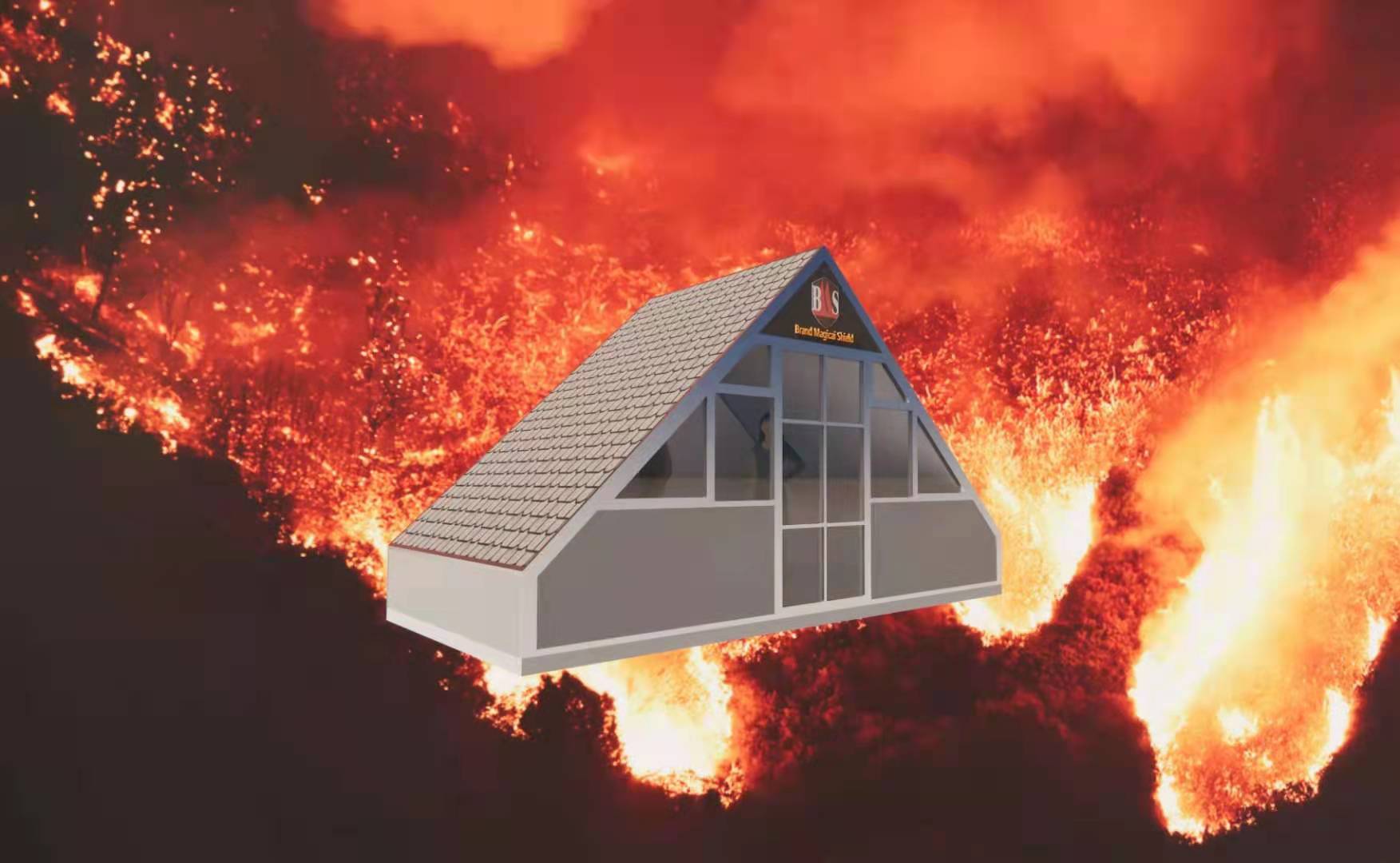 BLD: Waterproof, A1 fireproof and sturdy houses, FOB Shanghai. | |
|
|
4 BLD: Intelligent Automatic Water-Saving Car Wash Booth
|
 BLD: Intelligent Automatic Water-Saving Car Wash Booth
| | Equipped with an innovative intelligent, automatic, water-saving, high-pressure water spray car wash and drying system; quick assembly, available for home and commercial use, FOB Shanghai. | |
|
More BLD Products
| | | Local real estate developers and investors are welcome to cooperate with us.
|
canewstar@gmail.com
canewstar@hotmail.com
|
VC Projects |
1 Biotechnology Inc.
Support us to start the development of cheap and massive vaccines against the mutated covid19, Monkeypox and Tumors.
2 Bio-health Inc.
Support us to development and listing of bio-health products (good for middle-aged and elderly people) and health web platform.
Health
3 Art and antique Inc.
Support us to collect art and antiques, set up an auction company, and establish a web platform.
Art-Antique
| |
|
4 Co-Real estate development
(1)The development of tourism chains, retirement communities, and real estate web platforms.
Real Estate
| |
(2) Support our participation in the research, development and product design of special materials: strong fire resistance, high-building fire extinguishing, water resistance, earthquake resistance, damage resistance, ordinary gunfire resistance, and radiation resistance.
| | Disaster Resistant Materials and Products |
(3) Establish innovation hubs for young people to support them in starting their own businesses.
| |
5 Utilize space-based monitoring technology, along with on-the-ground prevention and rapid fire-suppression techniques, to control forest wildfires and high-rise building fires.
|
If you interested, please contact us:
canewstar@gmail.com
canewstar@hotmail.com |
|
|
| | | | |
| | | | | | | | | |
|
|